Joue-du-Bois, Normandy, France - March 2026
Our friends Tim & Laura invited us out to France for a week to house and cat-sit for them again whilst they were on holiday. Whilst we were there
we visited many places and looked after Bobbie the cat who is now 18 years old! Here are some photos from our trip:
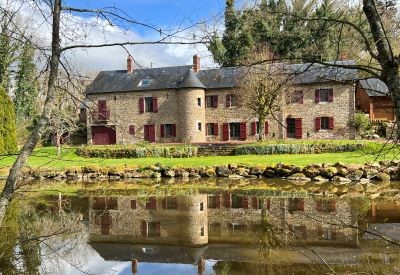
Tim & Laura's beautiful house
 |
 |
 |
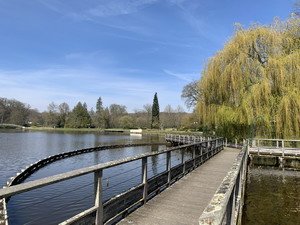
| The lake at Bagnoles-sur-l'Orne |
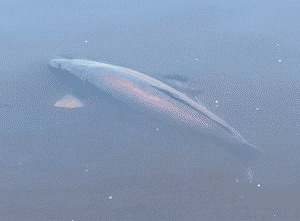
A large carp in the lake |
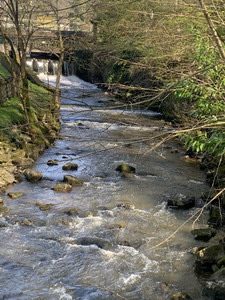
River La Vee running through the centre of Bagnoles |
 |
 |
 |
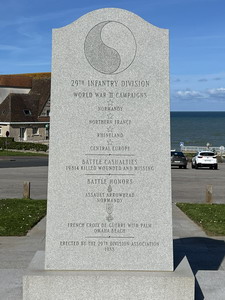
| The 29th Infantry Division were in the first wave of US troops landing on Omaha Beach on D-Day |
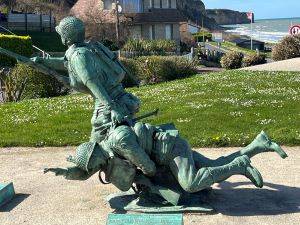
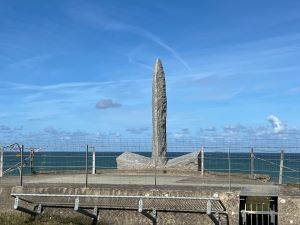
A statue of American troops at Vierville-sur-Mer who fought on Omaha Beach on D-Day |
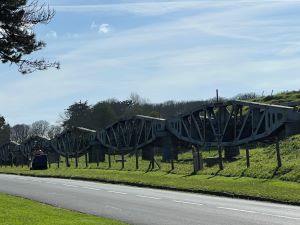
Floating pontoon bridges from Mulberry Harbours used to offload cargo on D-Day |
 |
 |
 |
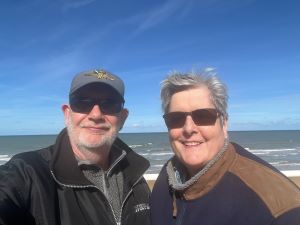
| Vierville-sur-Mer with Omaha Beach behind us |
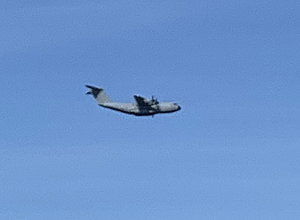
An Airbus A400M Atlas military transport aircraft happened to fly over us whilst we were at Omaha Beach |
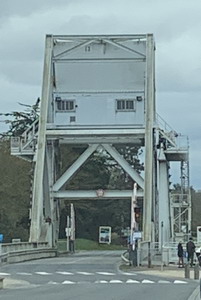
A replica of Pegasus Bridge in place of the original which was captured by British Forces as their first objective on D-Day |
 |
 |
 |
|
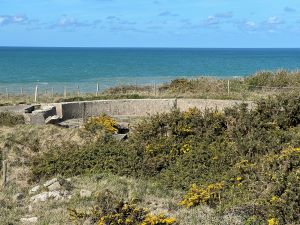
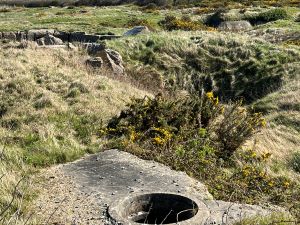
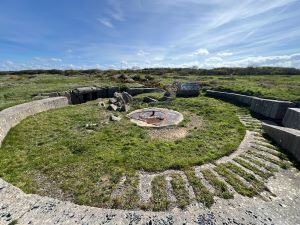
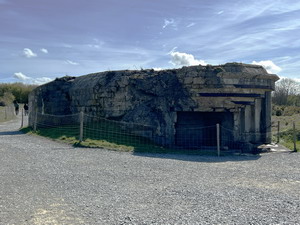
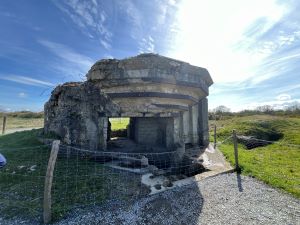
Pointe du Hoc where US Army Rangers scaled 100ft cliffs to destroy a German artillery battery on D-Day |
|
 |
 |
 |
|
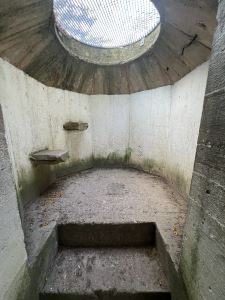
More photos of Pointe du Hoc |
|
Musee No. 4 Commando
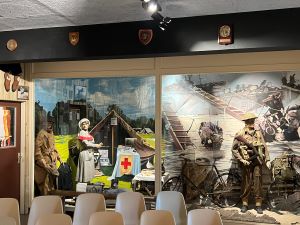
The No. 4 Commando Museum in Ouistreham tells the story of the British commandos who landed on Sword Beach on D-Day and joined up with the French
commandos to secure the port town of Ouistreham, before linking with the British airborne forces at Pegasus Bridge nearby.
 |
 |
 |
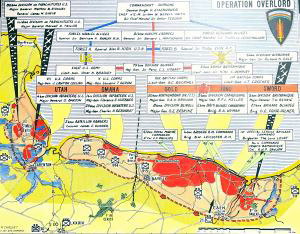
| A map showing the 5 beaches used in Operation Overlord on D-Day |
|
|
 |
 |
 |
|
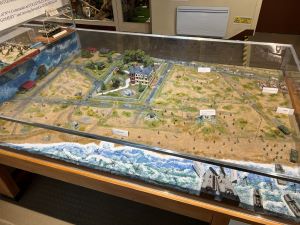
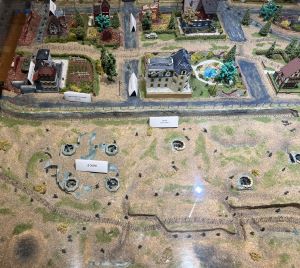
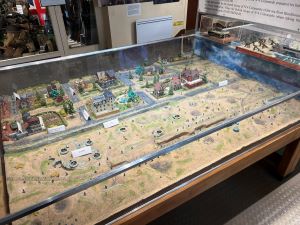
Large-scale models of Sword Beach and the town of Ouistreham |
|
 |
 |
 |
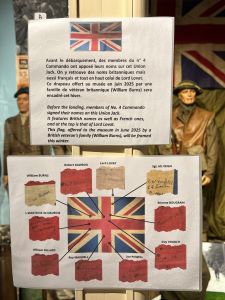
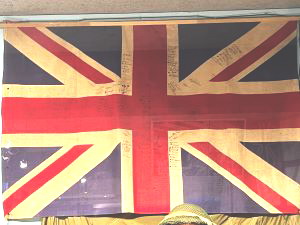
| Before the D-Day landings, members of No. 4 Commando signed their names on a Union Jack and this photo shows the names on the flag |
In 2025 the flag was offered to the Museum by the family of British Veteran, William Burns |
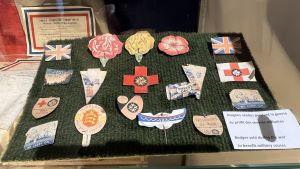
Badges sold during the War to benefit military causes |
 |
 |
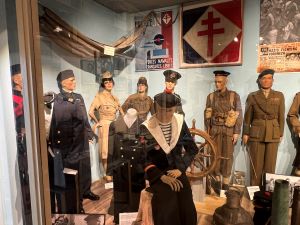 |
|
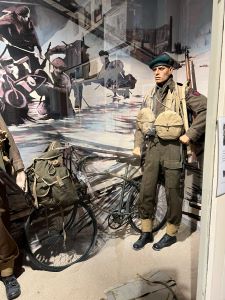
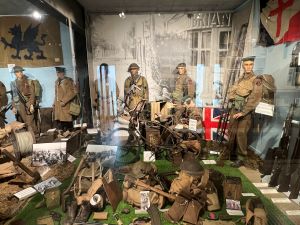
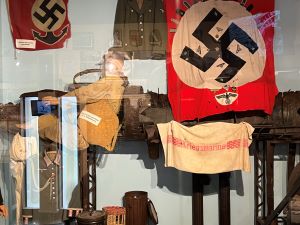
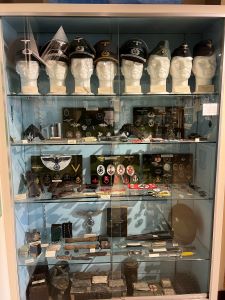
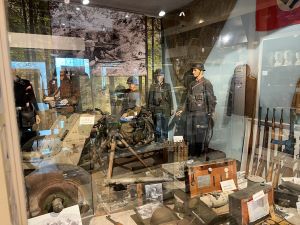
Various displays in the museum |
|
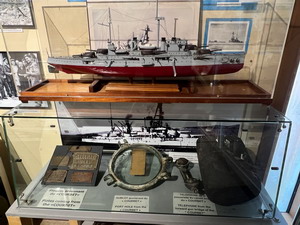 |
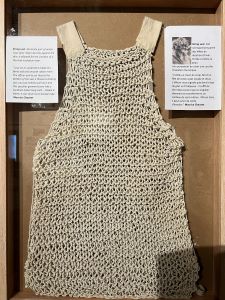 |
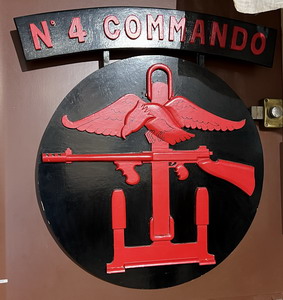 |
| The Courbet battleship, used by the French Navy to attack the Luftwaffe |
A string vest worn by the French commandos which, if you pull a thread at the bottom,
turns into a 100-metre-long cord which, when folded in three, can serve as an escape rope. |
The badge of No. 4 Commando |
 |
 |
 |
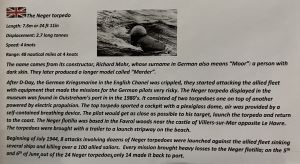
| The Neger Torpedo with cockpit above, allowing a soldier to get close to the target and then launch the torpedo below him |
|
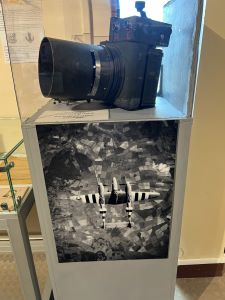
An aerial camera used in WW2 to produce detailed, high-altitude imagery for mapping and analysing enemy sites |
 |
 |
 |
|
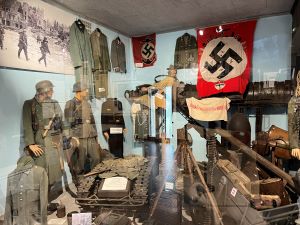
Various displays in the museum |
|
 |
 |
 |
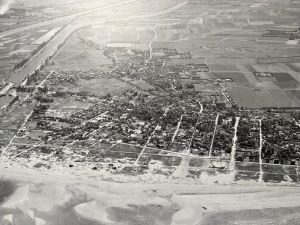
| Ouistreham and the surrounding area a year after D-Day |
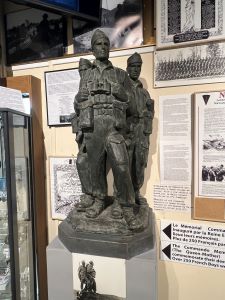
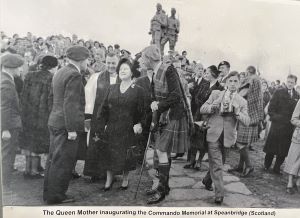
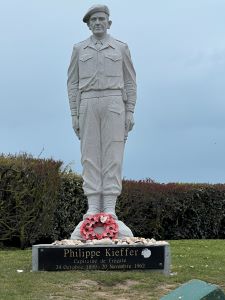
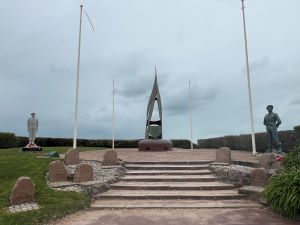
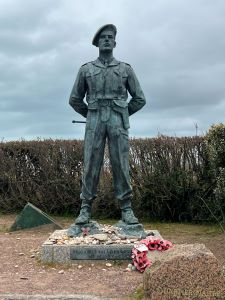
The Commando Memorial |
The Queen Mother inaugurating the Commando Memorial at Speanbridge in Scotland |
 |
 |
 |
Philippe Kieffer, Captain of the Green Berets
who led his men onto Sword Beach on D-Day |
'The Flame' Memorial at Ouistreham has
the names of the 177 French soldiers
who took part in D-Day |
Brigadier Lord Lovat, led British Commandos onto Sword Beach on D-Day |
 |
 |
 |
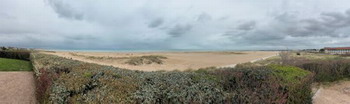
| Sword Beach as it looks today |
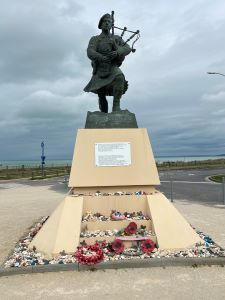
Bill Millin, the personal piper to Lord Lovat,
was the lone bagpiper who played
on Sword Beach on D-Day |
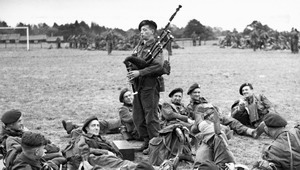
Piper Bill Millin playing to troops before D-Day |
Batterie de Merville
The Merville Gun Battery is a decommissioned coastal fortification in Merville-Franceville-Plage in Normandy, built as part of the Germans' Atlantic Wall
to defend continental Europe from Allied invasion. The six bunkers have been converted into a museum.
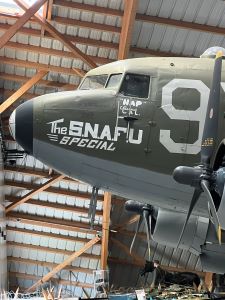
In the early hours of D-Day, C-47 Dakotas dropped paratroopers
from the 9th Battalion of the British Parachute Regiment, commanded by Lt Col Terence Otway, near the Merville Gun Battery so they could
neutralise the Battery to enable the assault on Sword Beach to begin. There were many casualties from
paratroopers drowning in nearby marshes and gliders released from the Dakotas missing their landing
points. Despite this, the mission was successful.
 |
 |
 |
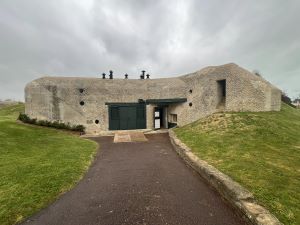
| Entrance to the Merville Gun Battery Museum |
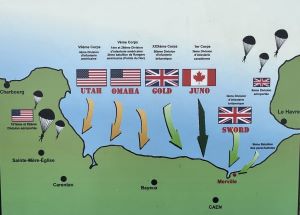
The five D-Day landing beaches in Normandy |
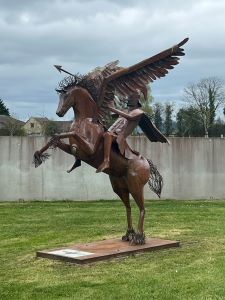
A statue of Pegasus, the winged horse in Greek mythology, the inspiration for the badge of the British Airborne Troops |
 |
 |
 |
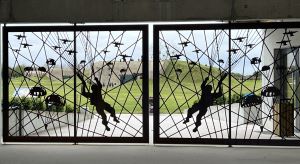
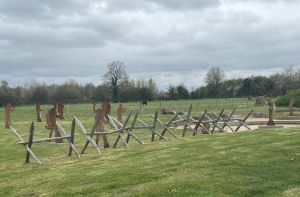
| Silhouettes approaching barbed wire fencing |
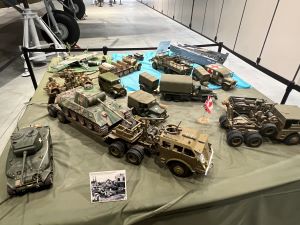
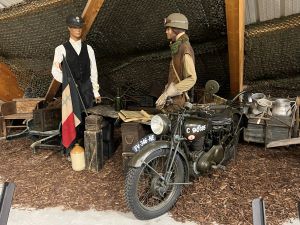
Display of military transport used by
Allied Forces on D-Day |
Norton type 16H motorbike used mainly for liaison missions by British troops |
 |
 |
 |
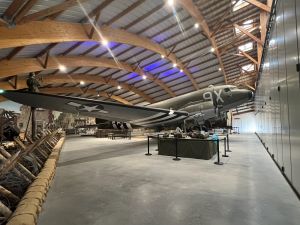
A C-47 Dakota which dropped
members of the US 101st Airborne Division
south of St Mere Eglise on D-Day |
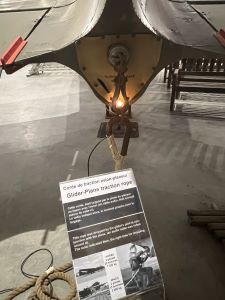
A traction rope from a Horsa glider towed by a C-47 Dakota to transport troops and equipment on D-Day |
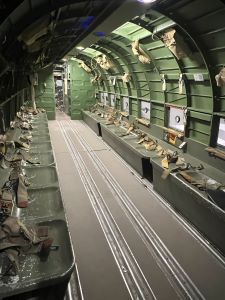
Inside one of the Dakotas which carried
20 fully-equipped paratroopers |
 |
 |
 |
| 'SNAFU Special' (Situation Normal All F* Up) - one of the Douglas C-47 Dakotas which transported the 9th Battalion, British Parachute Regiment and the US 101st & 82nd Airborne Division for the airborne assault on D-Day |
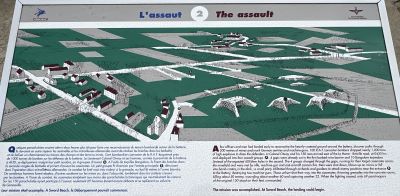
Map of the Merville Gun Battery, including bunkers to the right, defended by 130 German soldiers |
One of the 6 bunkers which contained an underground shelter and a command post |
 |
 |
 |
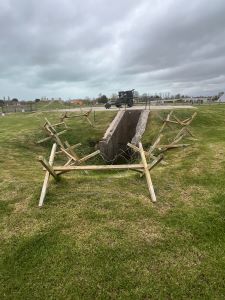
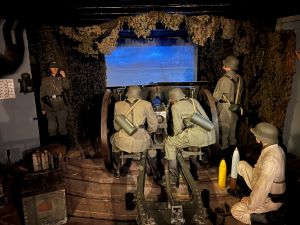
| Each bunker was protected by a powerful gun on the roof and barbed wire fencing at the entrance |
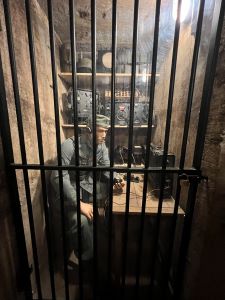
Radio Room in the bunker |
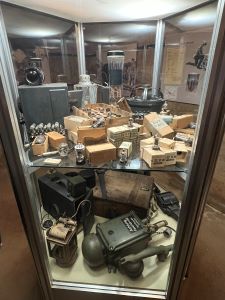
Military equipment |
 |
 |
 |
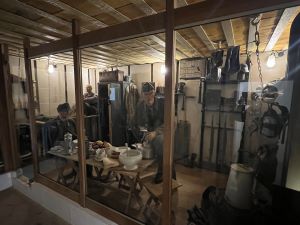
| Living conditions in the bunker |
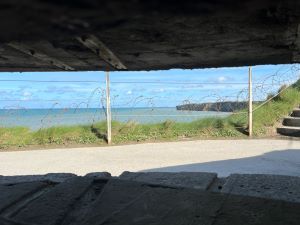
View from within the bunker |
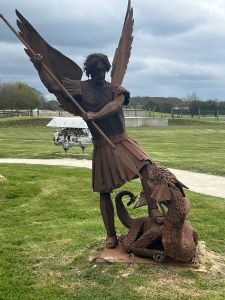
A statue of St Michael to whom the French paratroopers entrusted their souls |
 |
 |
 |
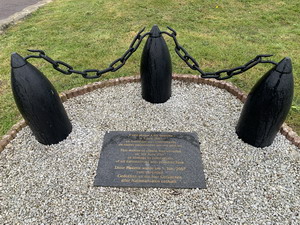
| A plaque unveiled on 5th June 2007 in homage to all combatants of all nationalities who perished at Merville Gun Battery |
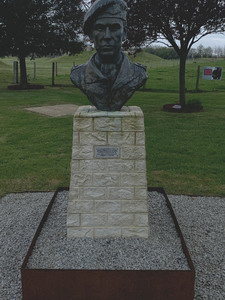
A memorial to Lt Col Terence Otway, 9th Battalion, British Parachute Regiment, whose paratroopers succeeded in neutralising the Merville Gun Battery on D-Day |
A memorial to the RAF in the Memorial Garden |
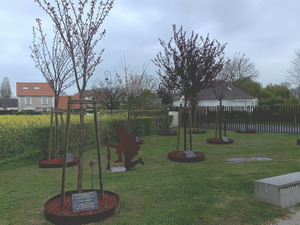
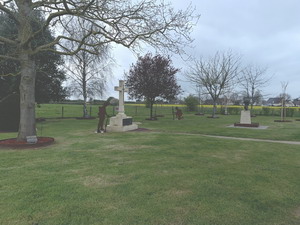
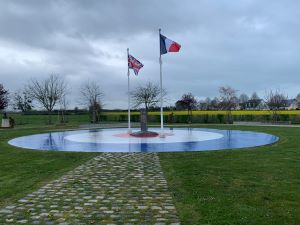
Various memorials at the Merville Gun Battery
MX5 - 2021-2026
